Transcultural Aesthetics

"Dust to Light - Palimpsest of Renewal" (Staub zu Licht - Palimpsest der Erneuerung) transforms the concept of historical reconciliation into a dynamic art installation for Cologne Cathedral.
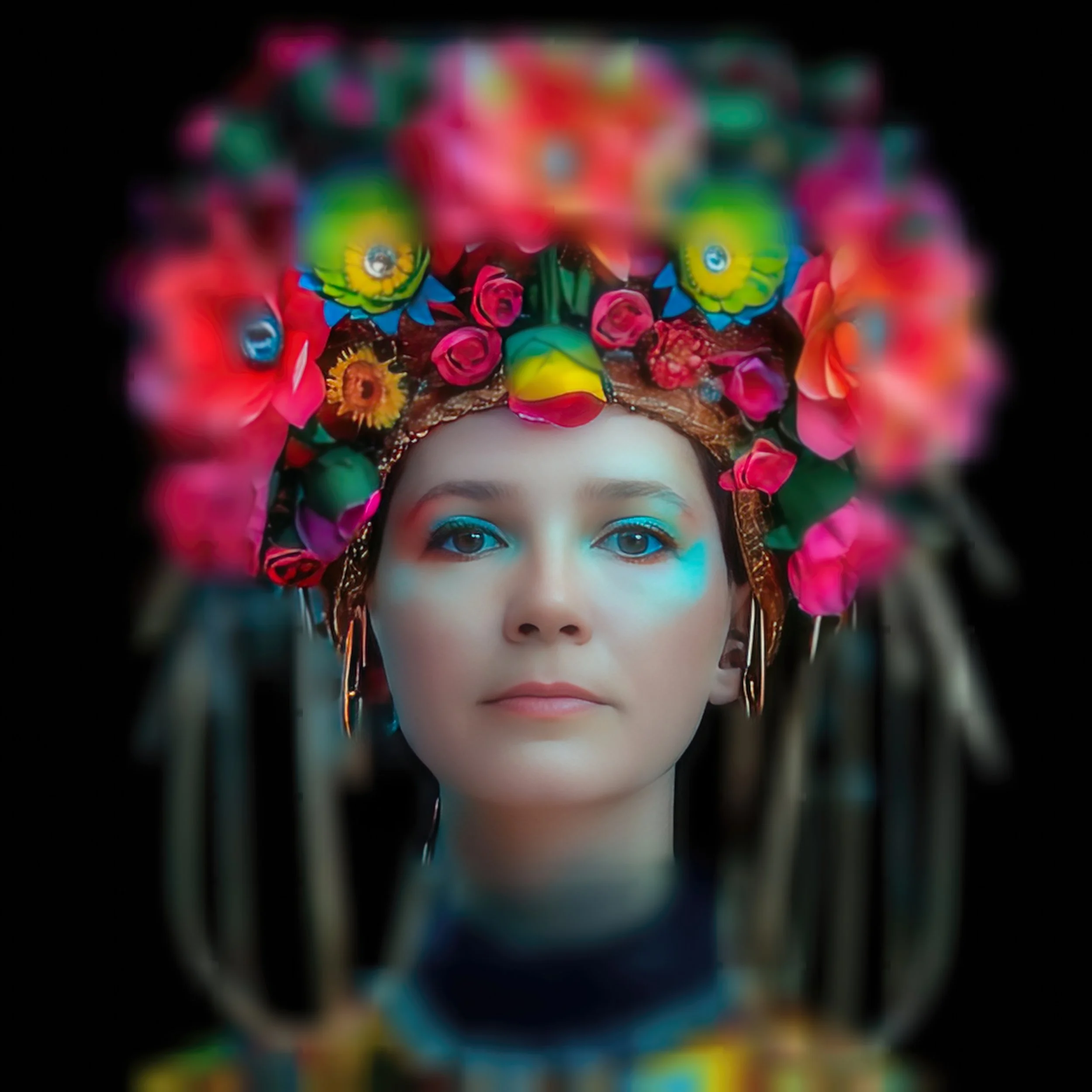
Hallucinating Traditions explores the intersection of AI, fashion, and cultural identity through animated portraits of Azra Akšamija wearing speculative headgear designs. Using a diverse dataset of Akšamija's face and historical costume references, advanced AI software was trained to generate morphing portraits that blend elements from various traditions and eras. The fluid transitions challenge viewers to reconsider notions of identity and tradition, while the AI-generated designs offer a glimpse into a future where technology shapes personal adornment and cultural expression. The project represents a meditation on the role of technology in shaping our understanding of self and cultural traditions. The portraits act as "cultural prototypes," inviting contemplation of the shifting ideals, values, and aesthetics that define our past, present, and future.
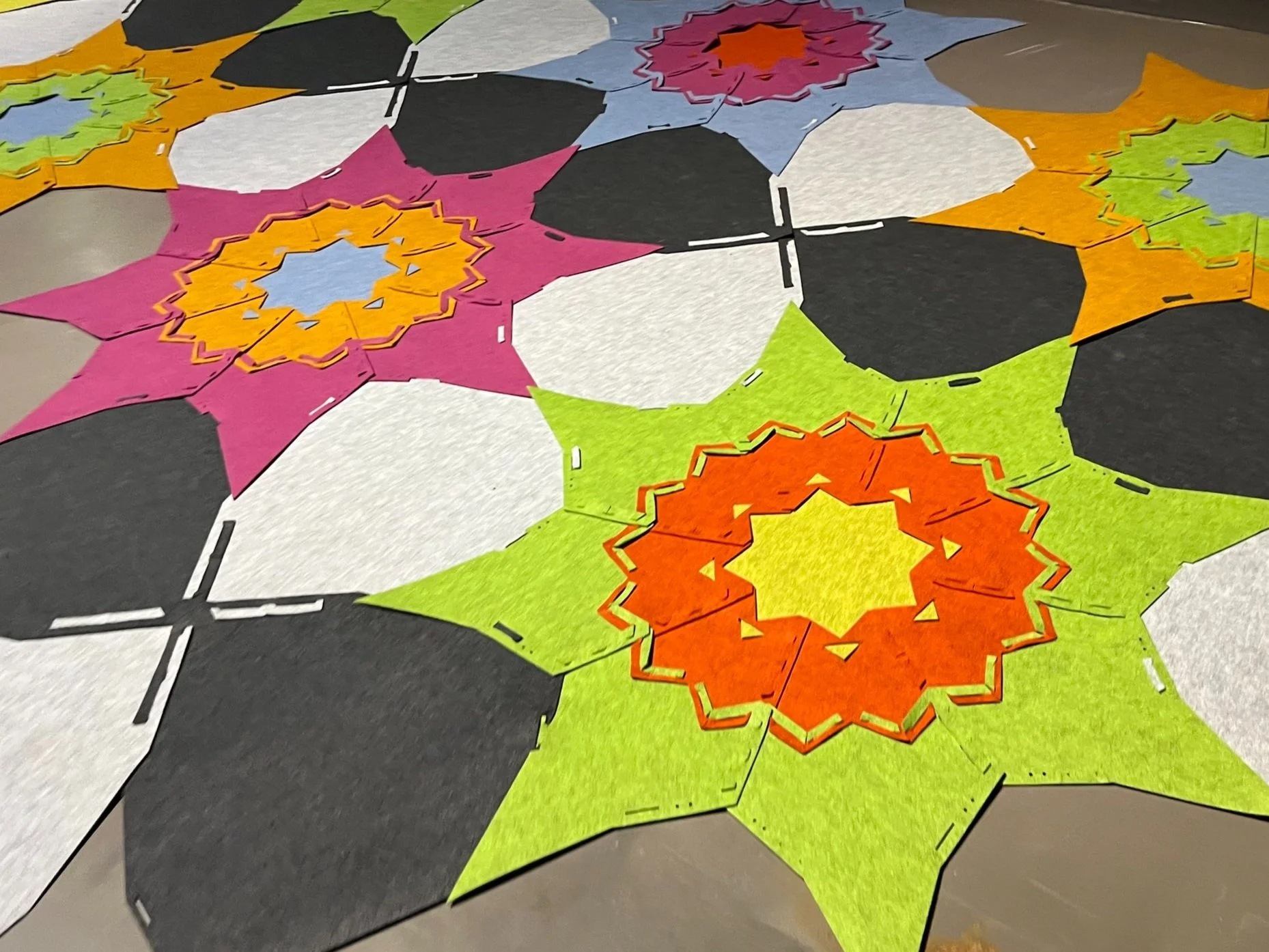
Inspired by the geometric motifs of Islamic art, the piece consists of modular felt carpet that can be transformed into slippers, accommodating both religious and secular functions.
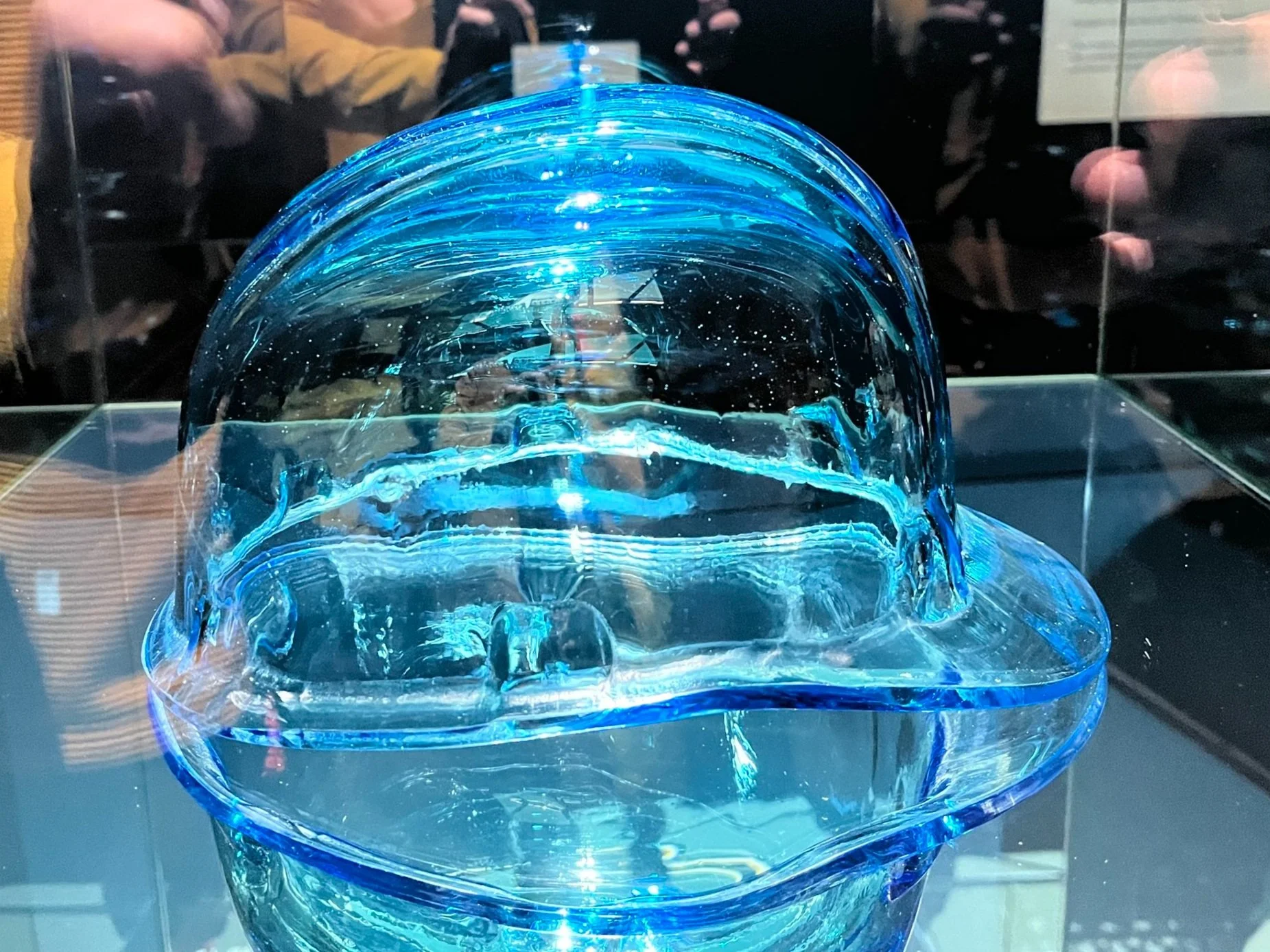
The Glass Helmet is a component of the Silk Road Works (2021). As a symbol of protection for workers in the building industry, the helmet represents a sanctuary where their rights are safeguarded, and their well-being is prioritized; the vulnerability of these rights is reflected in the fragility of the glass material. The blue color of the helmet also evokes the United Nations' Blue Helmets, symbolizing the importance of international peacekeeping efforts and the protection of global stability. The Glass Helmet represents a call for the creation of inclusive, supportive environments that provide a sense of security and belonging for all in the face of global challenges.
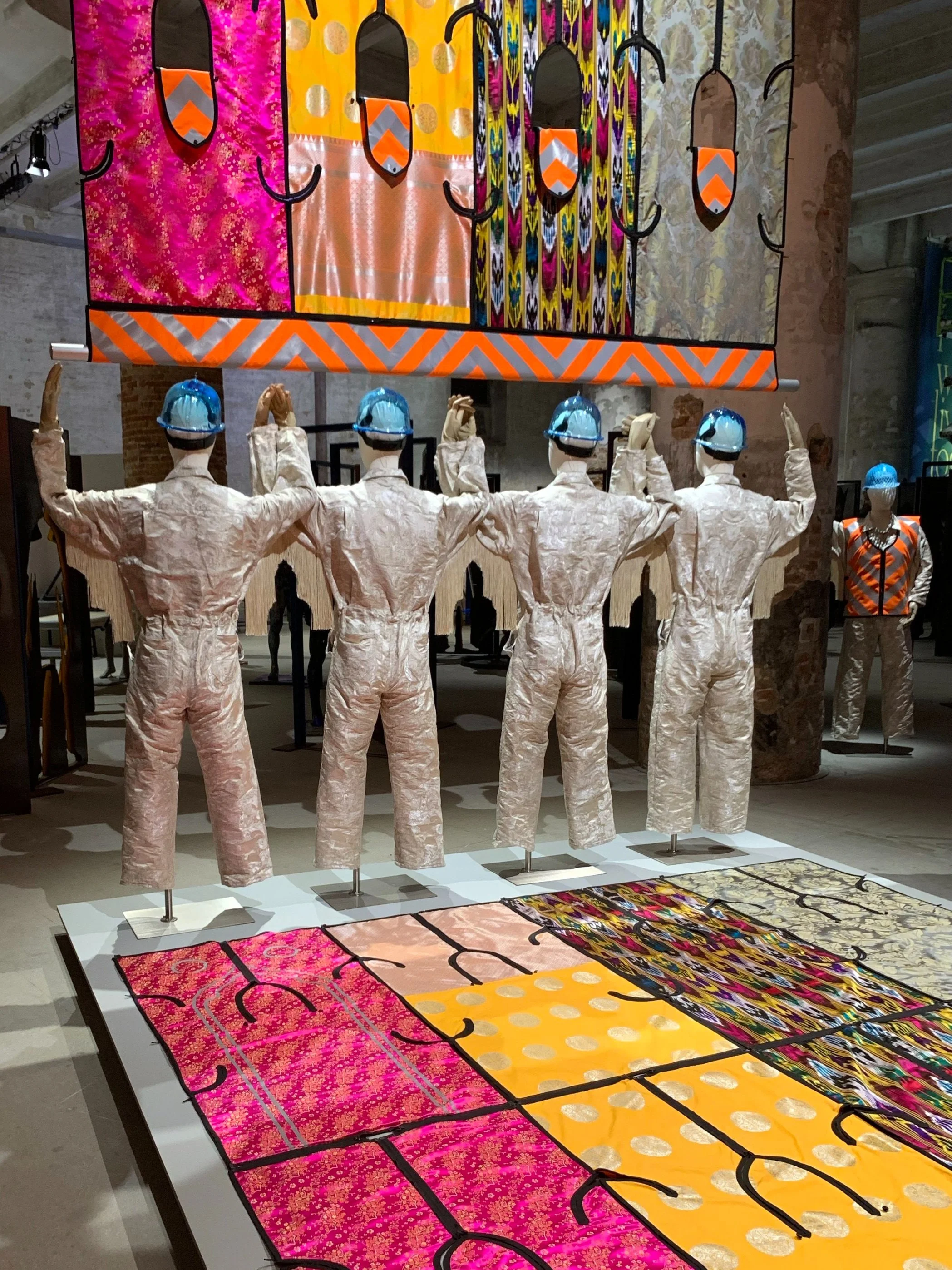
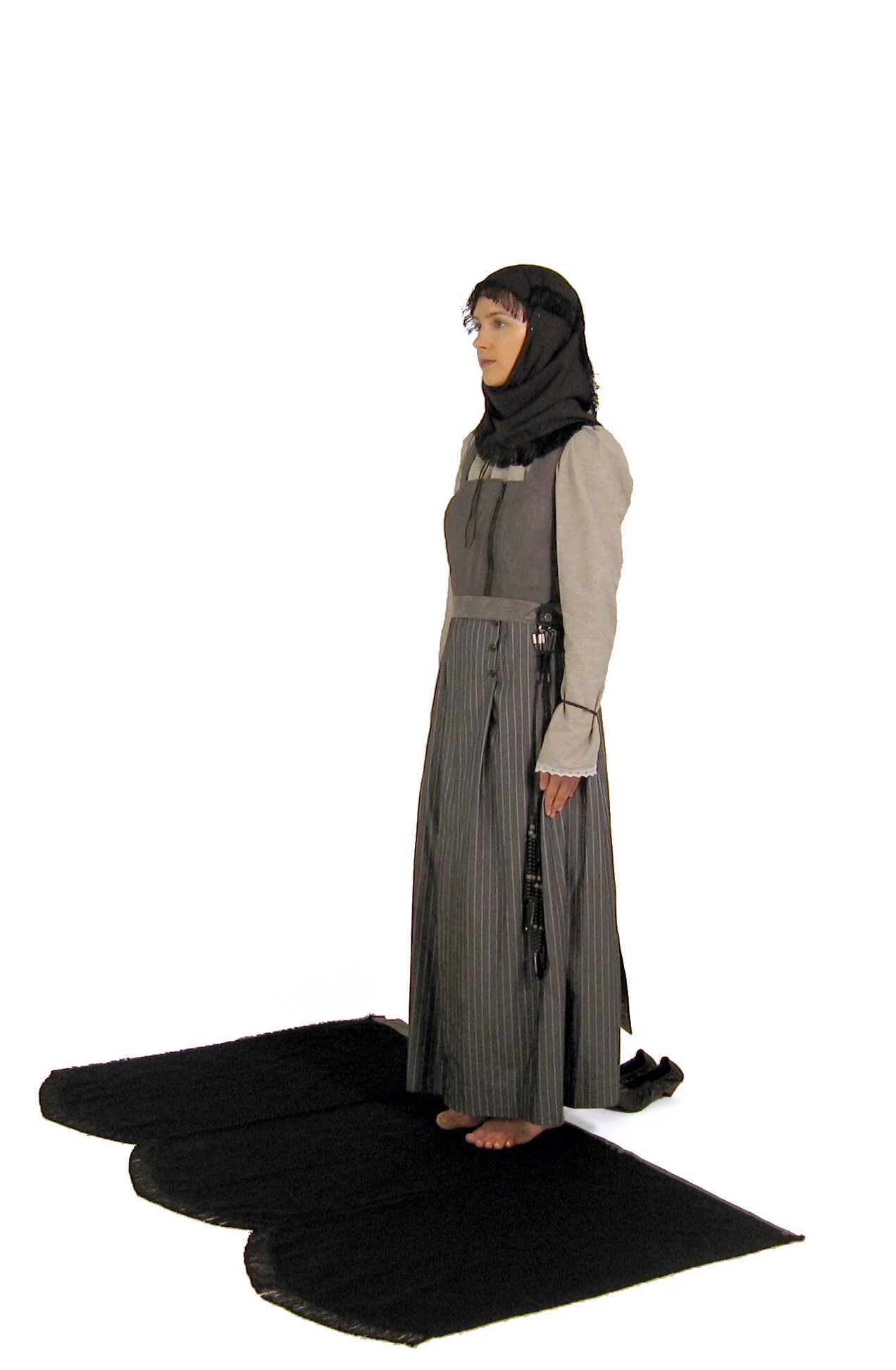
“Silk Road Works” is a symbolic construction site for a pluralist society. The project deploys architectural storytelling to offer a border reflection on issues of migration, labor, and identity politics along the Silk Road in history and today. Three responses to the Biennale theme “How will we live together?” are assembled through three Silk-Road themed architectural wearables: construction workers’ safety vests made of silks from various regions of the Silk Road, coveralls made of Venetian Rubelli fabric, and hard hats made by Murano glass masters of blue glass.

The Diaspora Scroll is a growing textile book that deconstructs myths of nationalism and local traditions through the embroidery patterns, which depict personal histories of migration, and the creation process, which facilitates transcultural exchange. The project takes the form through the sourcing, analysis of textile art, design, and techniques around the world, as well as through collaborative embroidery. Collaborating textile artists are invited to contribute to the project by […]


Wearable device, interactive performance, video (2014)
Commissioned by Edge of Arabia, UK
Yarn-dez-vous is a tactic cartography questioning what constitutes the geography of Middle Eastern and Islamic Art. The project takes the form of a wearable quilt featuring textiles from the MENA region and the United States. This fabric was chosen to map the identities, migration, and cultural encounters of its participants (wearers of the quilt). The quilt’s hexagons and stars can be transformed into individual letterman’s jackets and vice versa: the jackets unzip flat into geometric elements that fold into the larger quilt. The project name is a portmanteau word that combines the words “yarn” and “rendez-vous.” “Yarn” is both a thread and a story while “rendez-vous” refers to a meeting or a romance.
Project participants were asked to bring textiles from the places of their residence featuring the color code of the Sadu (Arabic weaving), which were combined with textiles from Boston. Twelve jackets were then made with these hybrid textiles. The project is in the state of an ongoing transformation and customization, developing personal logos, letters and stars, to be embroidered onto the jackets. Some jackets may be further transformed into variations on tunics, kaftans, abayas, dresses and shirts, inspired from East and West. The ongoing project will exhibit changes in color and pattern as it grows, becoming a map of the path taken by the transcultural participants as they offer their own cloth contributions.

Wearable device (2014)
Commissioned by the Festival New Hamburg, German Theater, Hamburg, DE
Wanderjahre #2 [Journeyman Years] is the second in a series of cultural mobility projects highlighting the immigrant as a transmitter of ornaments, knowledge, and skills. This site-specific installation produced for the festival New Hamburg organized by the German national theatre in Veddel, the immigrant quarter of Hamburg. The project is a modern laptop bag that can be transformed into an Islamic prayer rug, the material of which come from reused Journeyman pants, evoking the European tradition of wandering journeyman and their role as keepers and transmitters of cultural knowledge. The bag was fabricated in the “Original Veddel,” one of the last still-working ateliers that produce traditional custom-made working gear. The project links this tradition, with its European roots, to the new generation of cultural migrants in the global context.

Wearable CAVS Archive is a participatory memorial project created by ACT/CAVS artists, fellows, and staff to honor Otto Piene, transforming archival artifacts and imagery into wearable forms that prompted the sharing and recording of personal stories during his 2014 MIT memorial celebration.


Project commissioned by the Municipality of Altach as “Percentage for the Arts” project within the Islamic Cemetery Altach by Bernardo Bader, Altach.
Materials: Stainless steel mesh curtains, wooden shingles, new wool hand-woven carpets (flat-weave)
Dimensions: Curtains 300 x 300 x 290 cm; Carpets: 600 x 100 x 110 cm
Concept and design: Azra Akšamija
Research: Dietmar Offenhuber (conceptual contributions), Bernardo Bader (materials)
Production: Eva Grabherr (project management and mediation), Attila Dincer (spokesperson of the Islamic Community in Vorarlberg); Bernardo Bader (architecture of the cemetery and implementation); Thomas Marte (construction manager); Eberle Metall (metal work and shingles); Amila Smajović and the Association For The Protection Of The Bosnian Carpet (carpet weaving)
Financing: Municipalities and the Regional Government of Vorarlberg, Land Vorarlberg, donations of the Islamic Communities of Vorarlberg
Photographs: Adolf Bereuter
Also see: “Islamic Cemetery Altach, Austria,” in Architecture of Life: Aga Khan Award for Architecture 2013, edited by Mohsen Mostafavi, 198–215. Zurich: Lars Muller Publishers, 2013.
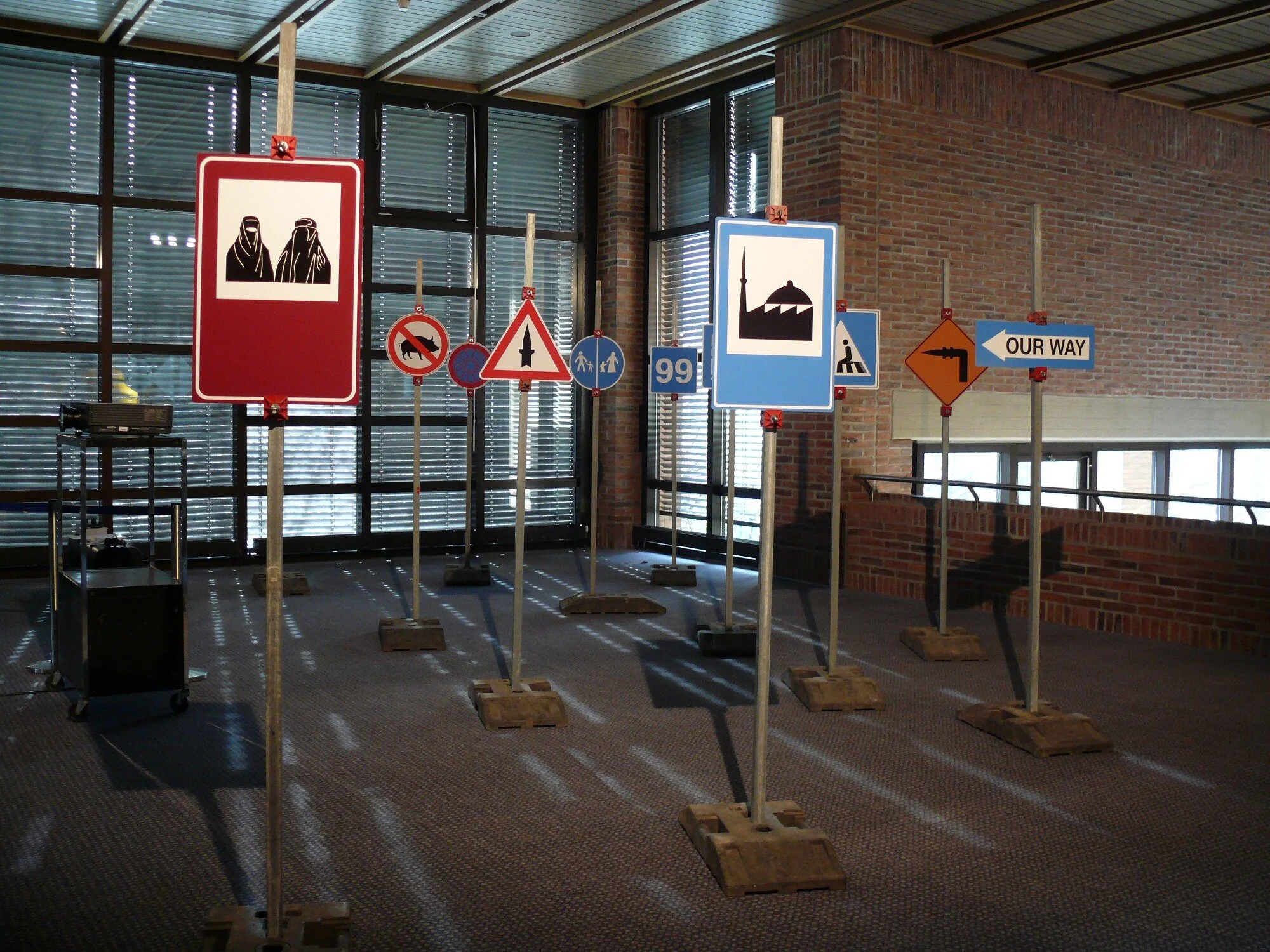
Installation (2012)
Commissioned by Onomatopee, Eindhoven, NL
This project gathers together a collection of anti-Muslim signs used by Islamophobic groups in Western Europe and appropriates them to create a multicultural response. The design of the signs evokes the system of isotypes used on public roads and transport systems. Against the essentialist grain of the isotype, we produce signs that simultaneously tag Islamophobic movements and warn against them, much as traffic isotypes warn about traffic conditions. The notion of threat and warning is thereby questioned: what do we really need to be alarmed about? Is it the mosques being built or the protests against them?
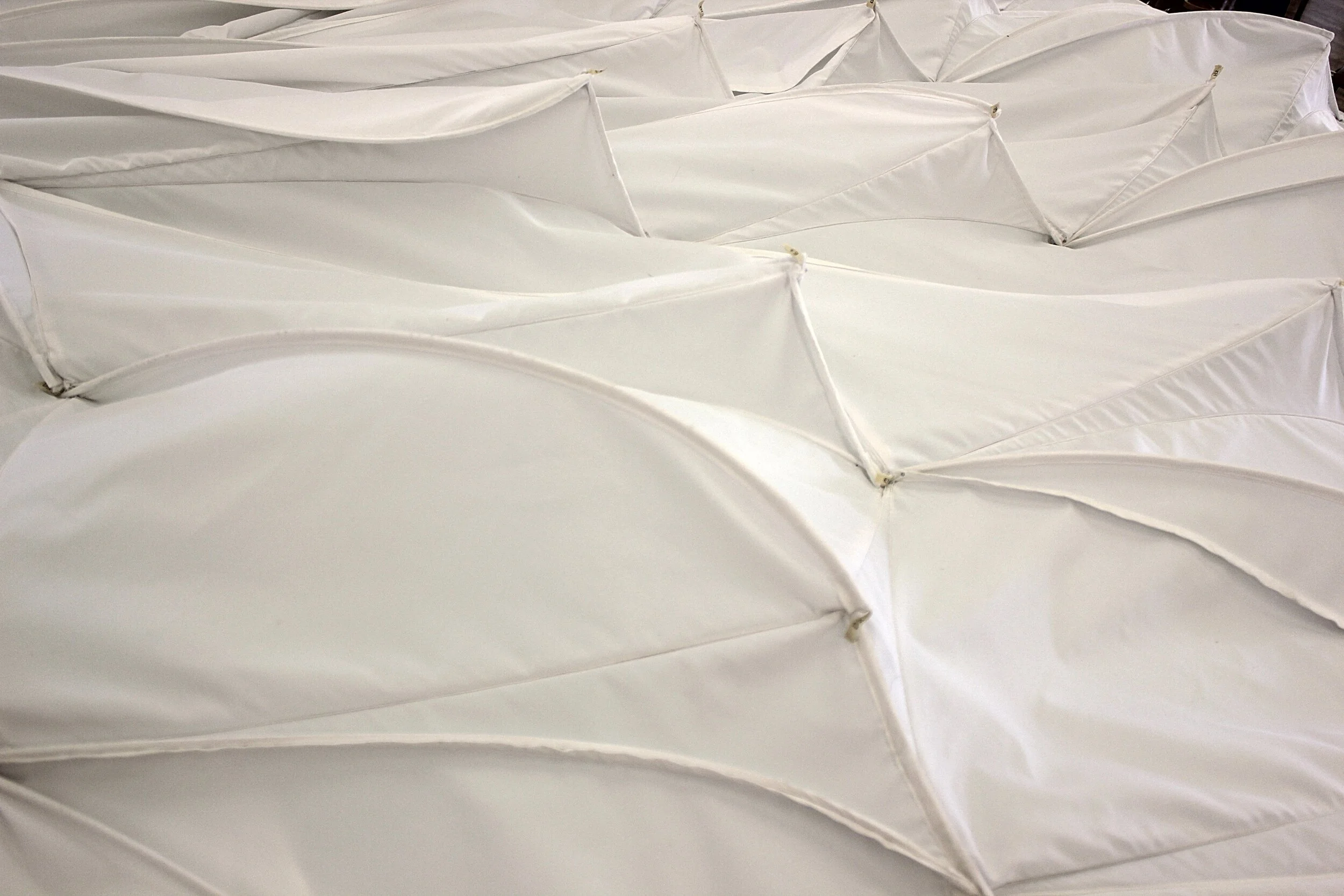
Installation (2012)
Commissioned by the Architectural Forum Upper-Austria (afo), Linz, AT
Co-authored with Joel Lamere
Unity Textile Muqarnas is a textile structure based on Islamic muqarnas, stalactite-like decorative three-dimensional elements found in Islamic monuments. The structure is hung from the neo-Gothic archway of the exhibition’s entrance. The modular structure of the muqarnas has been transformed and sewn together into a complex whole to signalize the need for a transcultural aesthetic characterized by a formal experimentation and enrichment through cultural interactions.
![Tempelmarke [Temple Tag]](https://images.squarespace-cdn.com/content/v1/5f14aae0a955d4346f3c5b82/1598406184997-8UUMQX1IFD10T0546IKY/tempelmarke4-copy.jpg)

![Kunstmoschee [Art-Mosque]](https://images.squarespace-cdn.com/content/v1/5f14aae0a955d4346f3c5b82/1743644769214-IIKYK2H3890CW4TEBYVS/22_Kunstmoschee_Azra+Aksamija_designs+by+Azar+Aksamija2007.jpg)