
Fragmented Commons
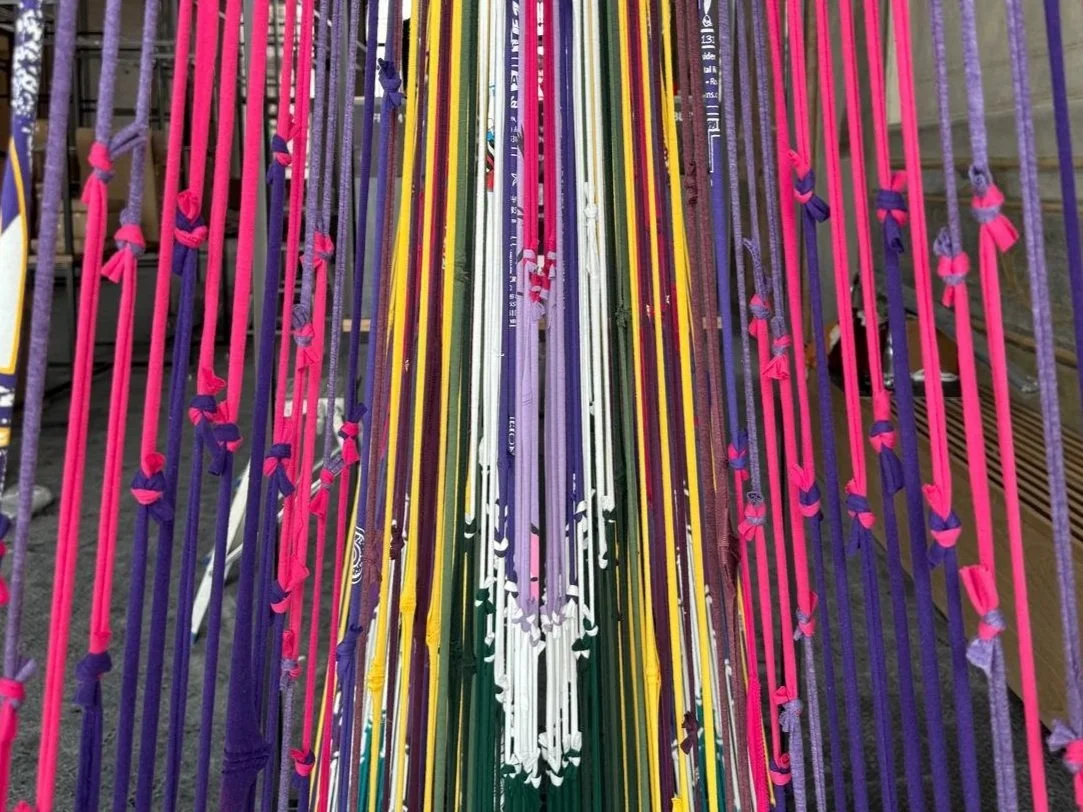
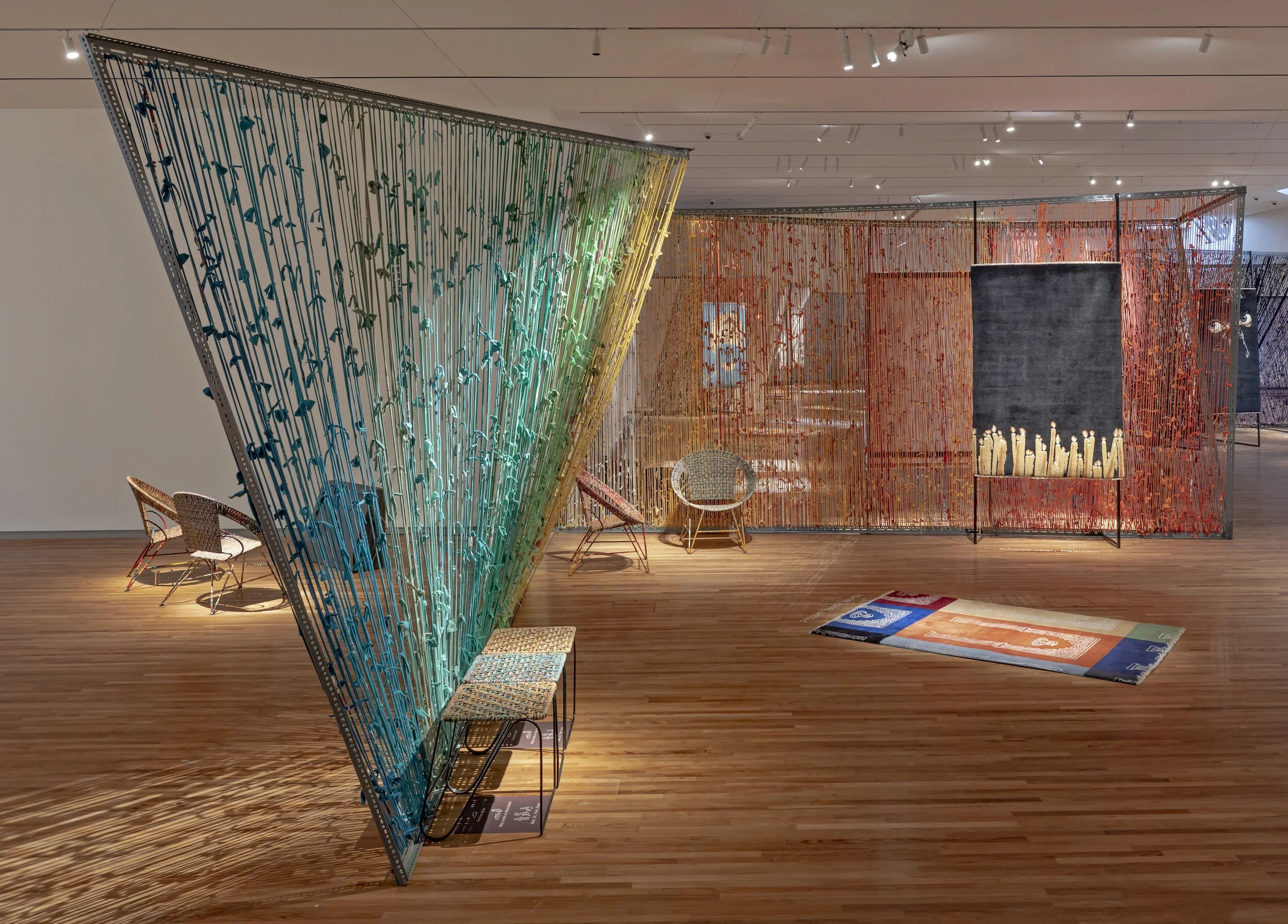
Weft of Waste – Ikat Reimagined transforms discarded fast fashion into an artistic meditation on consumption, craft, and cultural memory. Presented by the MIT Future Heritage Lab at the Berggruen Arts & Culture Center's exhibition "The Next Earth: Computation, Crisis, Cosmology"—a collateral event of the 2025 Venice Biennale Architettura—this installation reimagines the rich visual language of Uzbek ikat weaving through the lens of contemporary waste.

Urban Heat Chronicles is a community-based response to the growing crisis of urban heat—now recognized as the deadliest climate risk of our time. Selected for exhibition at the 2025 Venice Biennale Architettura under Carlo Ratti's theme "Intelligens. Natural. Artificial. Collective," this collaborative project between MIT Future Heritage Lab and Italian partners.

This installation transforms ordinary anaglyph 3D glasses into stained-glass-like windows. By repurposing these familiar consumer items, the project explores the intersection of the mundane and the divine, inviting viewers to perceive the sacred in unexpected places.

Coring is a textile art installation that critiques the global consumerist economy and its impact on the Earth as a sanctuary. Through the stacked T-shirts resembling core samples, the project explores the textile industry's role as one of the most lucrative and polluting industries today.

The installation probes what it means to be American today through the techno-economic, socio-cultural, and environmental dimensions embedded in the T-Shirt, the iconic staple of the American culture. The material narratives of identity, cultural mobility, and sustainability yarn a perspective on the American lifestyle–to become less indifferent to the social costs of maintaining our lifestyles means to become more open to the voices of others, not as a negotiating technique, but as an indispensable part of our planet’s chorus.
The installation consists of three components: 1. Stack of T-shirts reminiscent of a core sample, linked to looms made of shredded T-shirts, 2. Process Drawing, and 3. Quilt made of T-shirt scraps.

Co-MASK is a global collaborative project aimed at creating DIY fabric masks that promote hope, humanity, and hygiene practices in time of crisis. The Co-MASK is being developed by a global network of individuals who collaborate across borders to address a shared concern: to raise awareness about the risks of COVID-19 infection and the need for physical distancing and self-isolation while advocating at the same time for solidarity with […]

This drawing explores the world through the lens of a cotton T-shirt, depicting three parallel narratives. The first story (green) traces the environmental footprint of T-shirts through the resources and the pollution that are part of its manufacturing process. The second plot (blue) examines the technologies of the T-Shirt production, from the cultivation of the cotton plant and the associated history of slavery to the industrialized fabrication […]

The project explores the colloquial connection between birds and psychiatric hospitals. Referencing the history of behaviorism, the project takes shape of the Skinner operant conditioning box* as a symbol of the dark age of psychiatry. In Skinner’s experiments, behavior was assumed to be a mere function of external stimuli without regard to the subjects’ will or agency. He famously conditioned pigeons to play ping-pong or develop superstitious behaviors —implying that with the appropriate […]

Arteast 2000+ Pavilions is a large-scale installation of nine conceptual structures and graphic manifestos designed to spatially frame overlooked Eastern European artist groups within the exhibition Hello World: Revising a Collection at Hamburger Bahnhof, Berlin, critically expanding the canon of contemporary art through a dialogue on national collections, institutional critique, and global art histories.
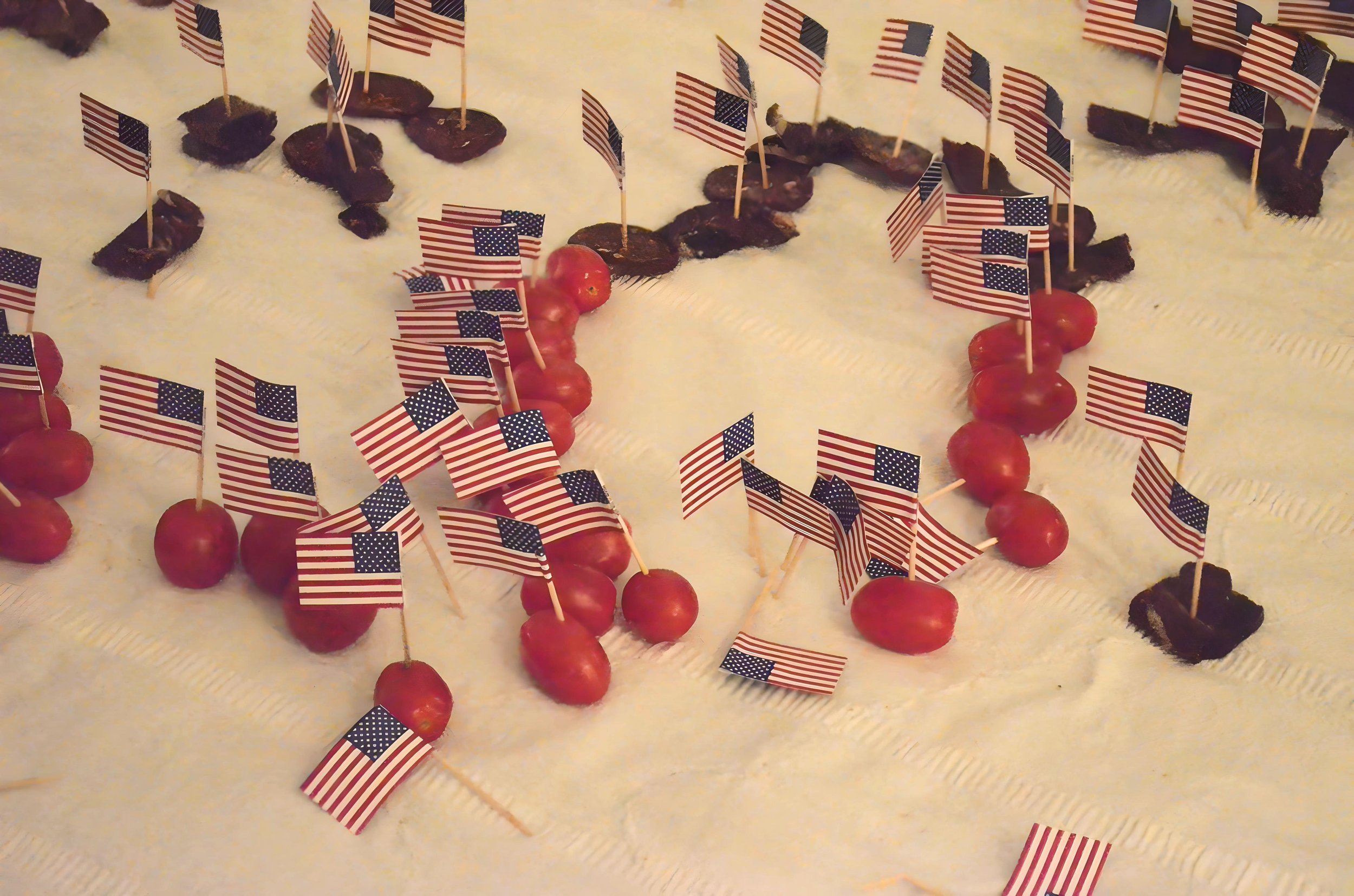
Digesting Dayton is an interactive buffet installation mapping the internal political borders of Bosnia and Herzegovina onto a tablecloth, inviting participants—primarily from the Bosnian diaspora—to symbolically “eat away” the divisions imposed by the Dayton Peace Agreement, while sharing food and marking their places of origin in a collective act of remembrance and critique.

Palimpsest of ’89 is an artistic installation exploring the role of Sarajevo’s cultural institutions in shaping the common heritage of Yugoslavia. The project was produced for The Heritage of 1989 exhibition at the Museum of Modern Art (Moderna galerija) Ljubljana, which reenacted the Second Yugoslav Documents, the largest retrospective of Yugoslav art before the 1990s Yugoslav breakup. Palimpsest of ’89 visualizes how the region’s history has been “written and rewritten” through the work […]


24 Photographs (2014):
The Spring Collection is a series of photographic self-portraits restaging the DIY helmets worn by protesters in Cairo during the Arab Spring revolution, in Ukraine, Turkey, and other nations that were undergoing radical political shifts during the previous five years. The project is a commentary on the activism in social media, where the images of these helmets became globally recognized through their ad-hoc reference to the objects of common life—a form of life that was becoming increasingly precarious. For a time, these symbols effectively created solidarity and mobilized global participation; though, ironically, these objects were quickly appropriated by the global fashion system, with its wealthy clientele, thus reversing the message.

Wearable CAVS Archive is a participatory memorial project created by ACT/CAVS artists, fellows, and staff to honor Otto Piene, transforming archival artifacts and imagery into wearable forms that prompted the sharing and recording of personal stories during his 2014 MIT memorial celebration.


![Museum Solidarity Lobby [MSL]](https://images.squarespace-cdn.com/content/v1/5f14aae0a955d4346f3c5b82/1598319255476-L5OX93QCFRY8B2UO3AKN/IMG_6437.jpg)
![Skalamerija [Contraption]](https://images.squarespace-cdn.com/content/v1/5f14aae0a955d4346f3c5b82/1598324145868-7NPRXQQUP5XKBCKN0II9/P1100841.JPG)

![Kupujmo Svoje! [Buy Local!]](https://images.squarespace-cdn.com/content/v1/5f14aae0a955d4346f3c5b82/1743683684371-TIULNU20HVGWCAO23XP8/Berlin1.jpg)


Navigating the Sky explores the sensory and scientific relationship between Earth's atmosphere and the atmospheres of exoplanets. Artists Azra Akšamija and Dietmar Offenhuber collaborate to explore how ideas and knowledge shape our understanding of the sky. Their animation combines two different knowledge systems.