
Performative Preservation
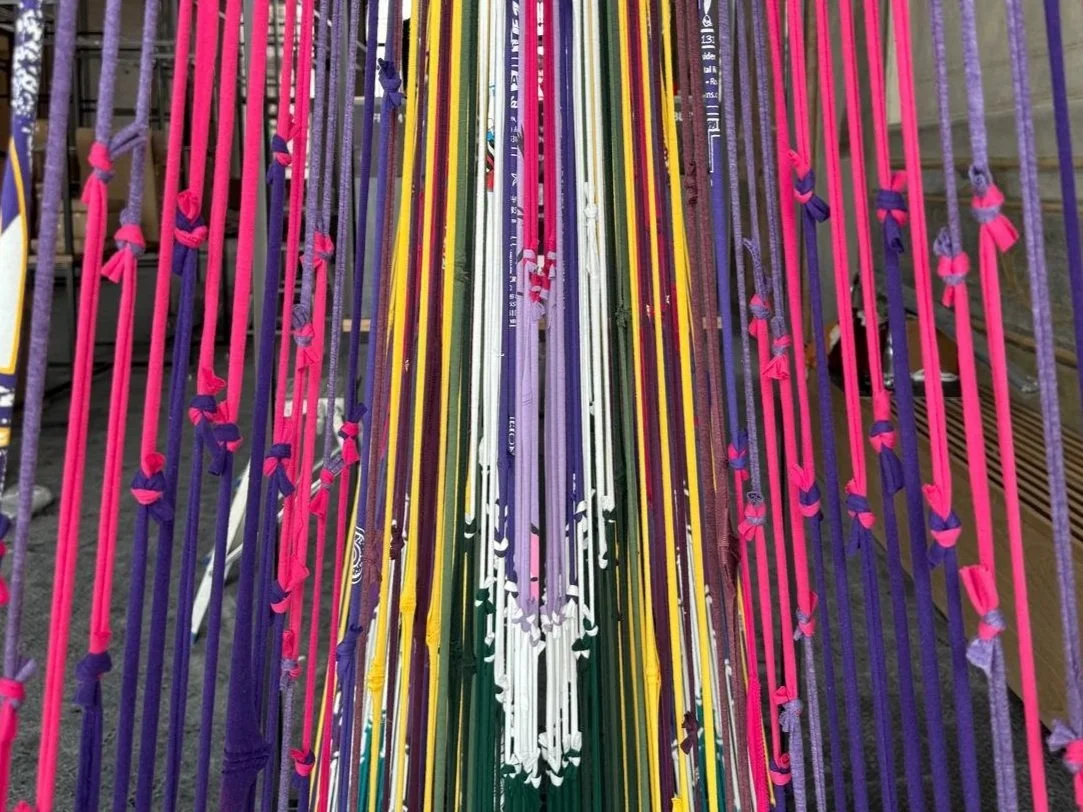
Weft of Waste – Ikat Reimagined transforms discarded fast fashion into an artistic meditation on consumption, craft, and cultural memory. Presented by the MIT Future Heritage Lab at the Berggruen Arts & Culture Center's exhibition "The Next Earth: Computation, Crisis, Cosmology"—a collateral event of the 2025 Venice Biennale Architettura—this installation reimagines the rich visual language of Uzbek ikat weaving through the lens of contemporary waste.

"Dust to Light - Palimpsest of Renewal" (Staub zu Licht - Palimpsest der Erneuerung) transforms the concept of historical reconciliation into a dynamic art installation for Cologne Cathedral.
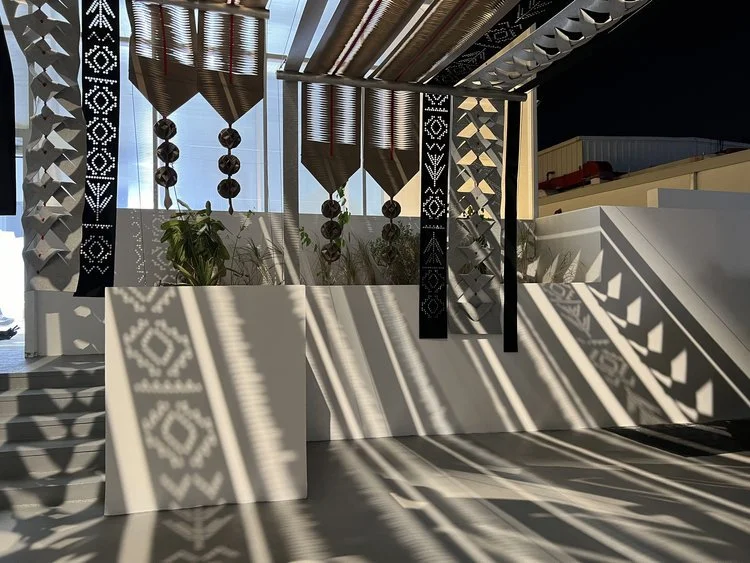
The "Abundance & Scarcity" project, presented at the Diriyah Biennale 2024, links environmental sustainability with cultural heritage into a cultural shelter on two scales: a social shelter in form of an outdoor shading canopy and a personal shelter in form of a "Bishty" wearable. The project embodies an artistic approach to addressing the extremes of desert climates while honoring the traditions of nomadic cultures, including those of Saudi Arabian tribes and contemporary nomads and refugees. The 70-meter-large outdoor canopy, situated on an outdoor area of the Biennale, is crafted from recycled felt used as architectural upholstery of the previous Islamic Arts Biennale in Jeddah. Based on the dimensions of the Saudi Arabian Bisht, a traditional cloak made from goat wool and camel hair, this modular textile system forms a shading structure that is both functional and visually captivating. The canopy's design, featuring laser-cut patterns, plays with light and shadow to create a dynamic visual effect reminiscent of Sadu weaving. This effect is enhanced by the gentle sway of the fabrics in the desert wind. This structure is not only a nod to the ingenious constructions of nomadic shelters but also incorporates sewn-in sachets of native desert plants, adding a layer of sensory experience through their refreshing scents.
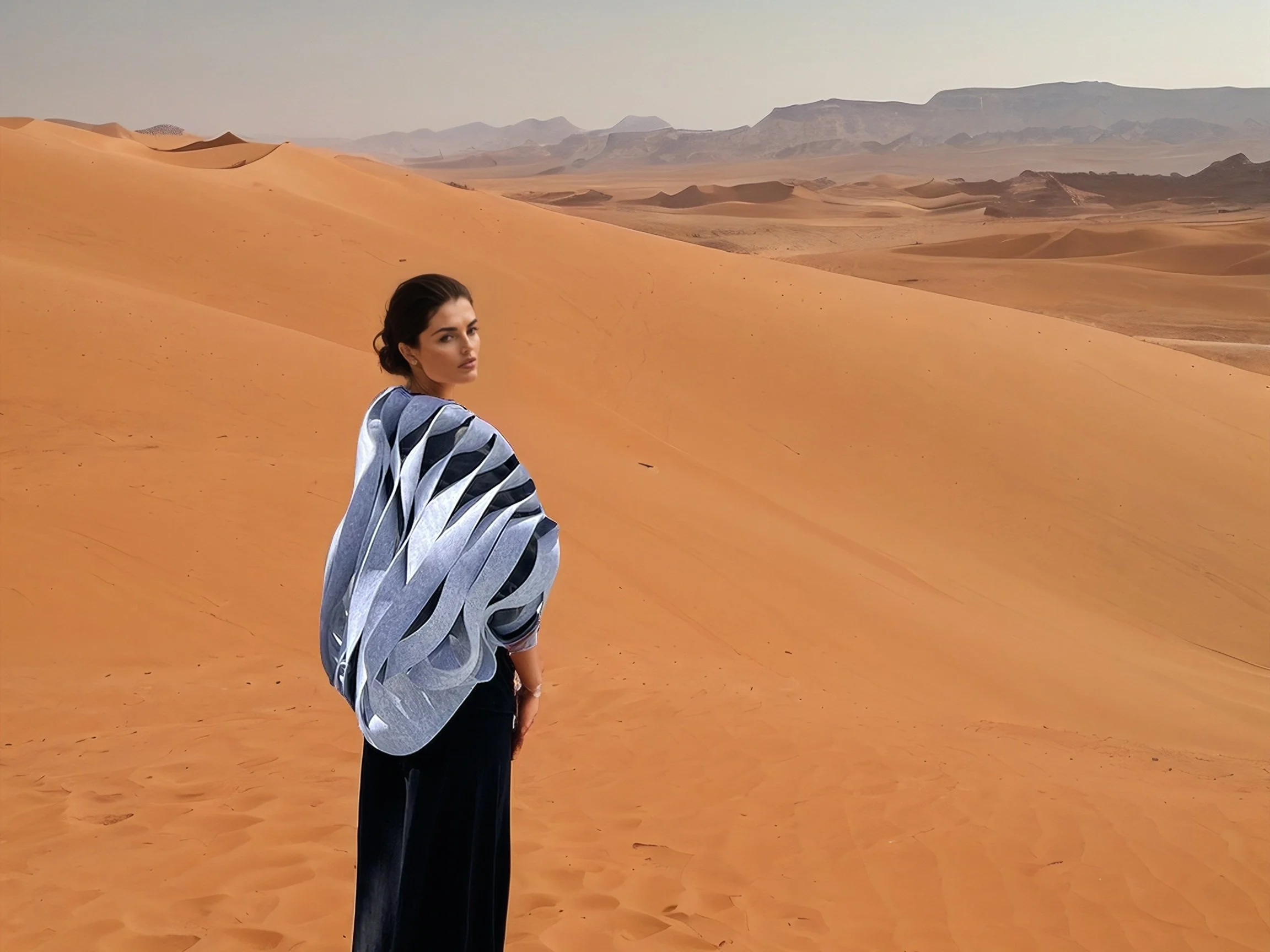
Inspired by the nomadic Bisht cloak, Bishty is a modular textile system that represents adaptable textile shelters for climate resilience.

Future to Be Rewritten #2 is a conceptual public art project by Azra Aksamija that reflects on the politics of representation in commemorative practices, emerging from her decision to withdraw a winning proposal for a Cambridge monument honoring the 19th Amendment, in solidarity with calls for greater inclusion of BIPOC artists and structural change in public art commissioning.

Living Heritage Atlas documents and visualizes Beirut’s living heritage of artisanship by mapping its craftspeople and cataloging its crafts through an open-source database, viewable through an interactive website. This project celebrates the past and present of local artisanship through archival data, interviews and community workshops.

Displaced Empire is a speculative installation based on the Al Azraq Refugee Camp in Jordan, reimagining it as the capital of a near-future world shaped by displacement, scarcity, and climate crisis. Through collaboratively designed tents, architectural artifacts, and personal narratives, the project explores the ingenuity of Syrian refugees who adapt and humanize standardized humanitarian shelters—transforming them into spaces of identity, resilience, and creative world-building.

The T-Serai is a portable palace for transcultural futures. Inspired by textile histories of the MENA region, the project involves participatory creation of modular tapestries made of recycled clothes. The tapestries can be used to personalize the standardized refugee shelters (T-Shelters), facilitating mobile storage and vertical gardening. They can also be used to set up tents for storytelling and other social gatherings animated through multi-sensory experiences […]
Digital Majlis is a prototype for a future art and educational space developed by the Future Heritage Lab at the Al Azraq Refugee Camp in Jordan, reimagining the traditional majlis as a site for artistic creation, cultural preservation, and transcultural dialogue through collaborative projects between MIT and Syrian refugees.
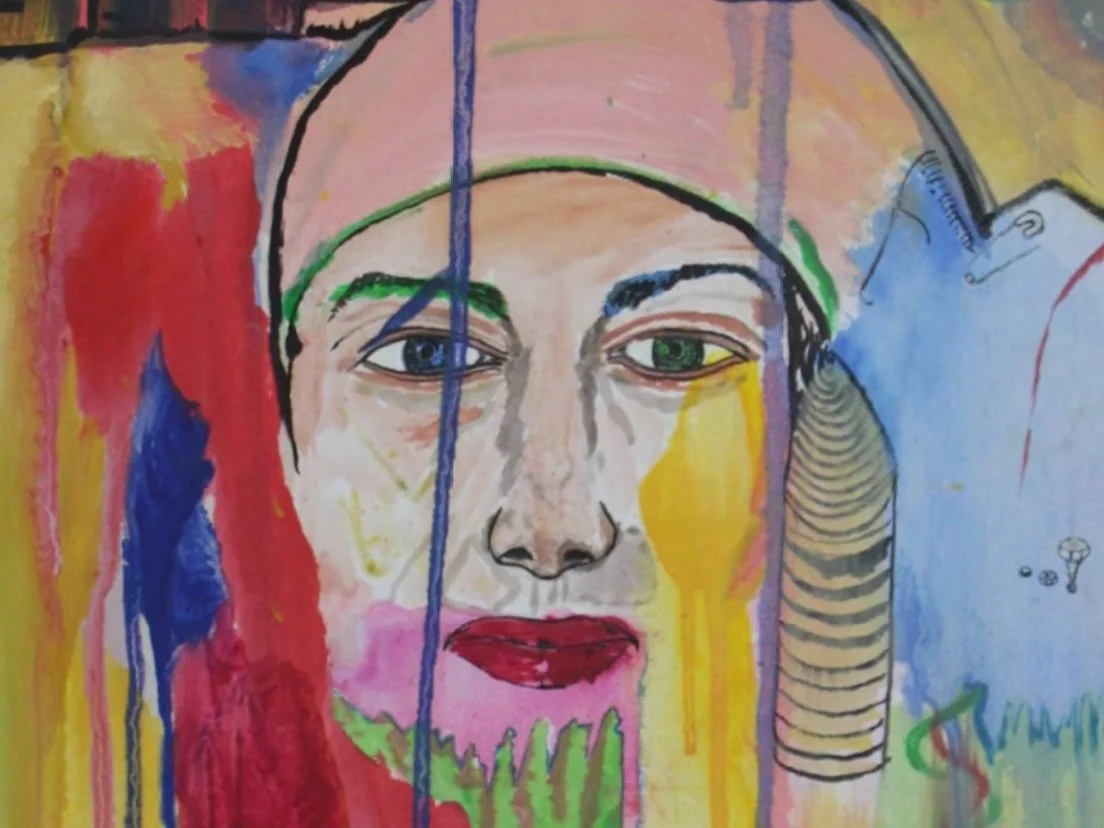
A Living Part of This World is a photo story and a poem documenting the creative ingenuity of Syrian refugees in Al Azraq Camp, Jordan—showcasing shelter adaptations, artistic inventions, and personal narratives produced through Future Heritage Lab workshops in photography and writing. The project highlights how art and design foster resilience, cultural preservation, and hope in humanitarian contexts.
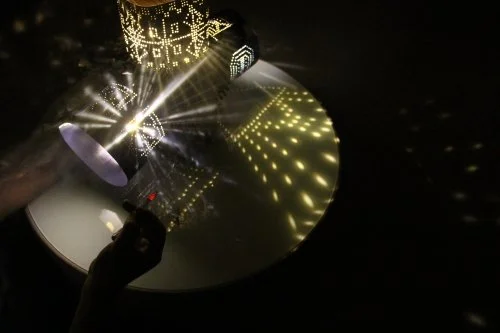
The Lightweaver is a kinetic lighting sculpture that is also an educational and preservationist device, a cultural prosthetic for hope, and a visual critique of humanitarian design. The project was prototyped at MIT and developed as a co-creation with the artists, engineers, and inventors of the Al Azraq Refugee Camp in Jordan. The project represents both a poetic and utilitarian response to everyday life problems in the refugee camp: it addresses the visual impoverishment of shelters through the design of […]

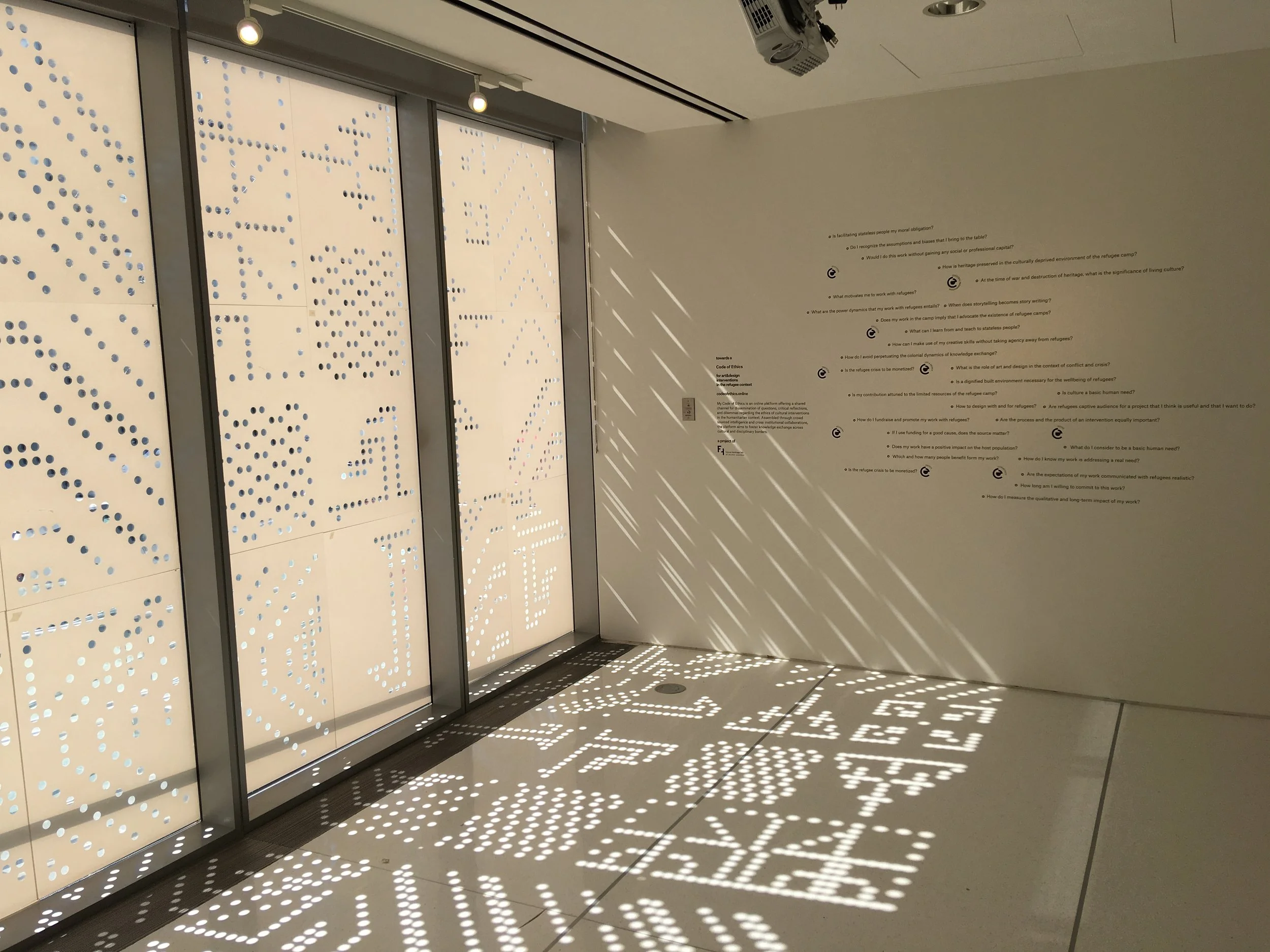
Code of Ethics? explores the intersection of aesthetics, ethics, and poetics in the humanitarian context. The project includes critical artistic investigations through participatory action research and transcultural workshops, offering a shared platform for dissemination of questions and critical reflections across cultural and disciplinary borders.
Gathering over shared meals, coffee, and chocolate, participants are asked to share their own experiences […]